

Deprecated: Return type of WPGMZA\CustomFeatureFields::getIterator() should either be compatible with IteratorAggregate::getIterator(): Traversable, or the #[\ReturnTypeWillChange] attribute should be used to temporarily suppress the notice in /var/www/staging.meaningfulcarematters.com/wp-content/plugins/wp-google-maps-pro/includes/custom-fields/class.custom-map-object-fields.php on line 120

Deprecated: Return type of WPGMZA\CustomFeatureFields::jsonSerialize() should either be compatible with JsonSerializable::jsonSerialize(): mixed, or the #[\ReturnTypeWillChange] attribute should be used to temporarily suppress the notice in /var/www/staging.meaningfulcarematters.com/wp-content/plugins/wp-google-maps-pro/includes/custom-fields/class.custom-map-object-fields.php on line 129

Deprecated: Return type of WPGMZA\CustomFeatureFields::count() should either be compatible with Countable::count(): int, or the #[\ReturnTypeWillChange] attribute should be used to temporarily suppress the notice in /var/www/staging.meaningfulcarematters.com/wp-content/plugins/wp-google-maps-pro/includes/custom-fields/class.custom-map-object-fields.php on line 111

Deprecated: Return type of WPGMZA\CustomFields::getIterator() should either be compatible with IteratorAggregate::getIterator(): Traversable, or the #[\ReturnTypeWillChange] attribute should be used to temporarily suppress the notice in /var/www/staging.meaningfulcarematters.com/wp-content/plugins/wp-google-maps-pro/includes/custom-fields/class.custom-fields.php on line 121

Deprecated: Return type of WPGMZA\CustomFields::jsonSerialize() should either be compatible with JsonSerializable::jsonSerialize(): mixed, or the #[\ReturnTypeWillChange] attribute should be used to temporarily suppress the notice in /var/www/staging.meaningfulcarematters.com/wp-content/plugins/wp-google-maps-pro/includes/custom-fields/class.custom-fields.php on line 130

Deprecated: Return type of WPGMZA\CustomFields::count() should either be compatible with Countable::count(): int, or the #[\ReturnTypeWillChange] attribute should be used to temporarily suppress the notice in /var/www/staging.meaningfulcarematters.com/wp-content/plugins/wp-google-maps-pro/includes/custom-fields/class.custom-fields.php on line 136

Deprecated: Creation of dynamic property WPGMZA\ProDatabase::$version is deprecated in /var/www/staging.meaningfulcarematters.com/wp-content/plugins/wp-google-maps-pro/includes/class.pro-database.php on line 12

Deprecated: Creation of dynamic property WPGMZA\ProDatabase::$charset_collate is deprecated in /var/www/staging.meaningfulcarematters.com/wp-content/plugins/wp-google-maps-pro/includes/class.pro-database.php on line 13

Notice: Function _load_textdomain_just_in_time was called incorrectly. Translation loading for the elementor domain was triggered too early. This is usually an indicator for some code in the plugin or theme running too early. Translations should be loaded at the init action or later. Please see Debugging in WordPress for more information. (This message was added in version 6.7.0.) in /var/www/staging.meaningfulcarematters.com/wp-includes/functions.php on line 6131

Notice: Function _load_textdomain_just_in_time was called incorrectly. Translation loading for the elementor-pro domain was triggered too early. This is usually an indicator for some code in the plugin or theme running too early. Translations should be loaded at the init action or later. Please see Debugging in WordPress for more information. (This message was added in version 6.7.0.) in /var/www/staging.meaningfulcarematters.com/wp-includes/functions.php on line 6131

Notice: Function _load_textdomain_just_in_time was called incorrectly. Translation loading for the uncanny-learndash-groups domain was triggered too early. This is usually an indicator for some code in the plugin or theme running too early. Translations should be loaded at the init action or later. Please see Debugging in WordPress for more information. (This message was added in version 6.7.0.) in /var/www/staging.meaningfulcarematters.com/wp-includes/functions.php on line 6131

Warning: Cannot modify header information - headers already sent by (output started at /var/www/staging.meaningfulcarematters.com/wp-includes/functions.php:6131) in /var/www/staging.meaningfulcarematters.com/wp-content/mu-plugins/csp-malware-block.php on line 1
Behaving badly? - part 2 - Meaningful Care Matters
Notice: Function WP_Scripts::add was called incorrectly. The script with the handle "datatables-responsive" was enqueued with dependencies that are not registered: datatables. Please see Debugging in WordPress for more information. (This message was added in version 6.9.1.) in /var/www/staging.meaningfulcarematters.com/wp-includes/functions.php on line 6131

Understanding behaviour – a psychological perspective

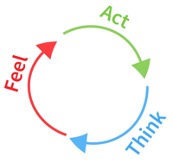
Psychology has taken the notion of exploring behaviour as a learned interaction with the environment over time (conditioning) and our response to the environment stimuli (2017, McLeod). This would indicate that behaviour is in fact neither good nor bad, behaviour is an interplay of three components – actions, cognition and emotions (Farnsworth, 2019)
Actions are Behaviour

An action denotes everything that can be observed, either with bare eyes or measured by physiological sensors.

Cognitions are Behaviour

Cognitions describe thoughts and mental images you carry with you, and they can be both verbal and nonverbal. Cognitions comprise skills and knowledge which are a response to the actions we enact in response to the sensory environment.

Emotions are Behaviour

An emotion is any relatively brief conscious experience characterized by intense mental activity, and a feeling that is not characterized as resulting from either reasoning or knowledge. This usually exists on a scale, from positive (pleasurable) to negative (unpleasant).

There is a stigma which is associated with the word behaviour when in fact, behaviour is a healthy part of humanity and we need behaviours to be happy, healthy, and responsive in our society. Feelings matter most and we cannot forget the person behind the expression, after all, they are communicating something to us we desperately need to know.  That is the behaviour that needs to be our new norm.

I Talked to a Lady
I talked to a lady yesterday, She didn’t know my name
She was amazed to hear about my past, and the places I had been
Her daughter’s life so similar, filled her with awe and fear
She looked at me bewildered, could this really be real?
We talked about her family, We talked about her past
We talked about the folk she’d known, Their walk their talk their cheer
The ones who floated through her world, And those who stopped to share
We talked about the future, her hopes her dreams her fears
We talked about her sorrows, All the sadness life threw in
We talked about her children – (Some things I shouldn’t hear!)
We giggled and cried and laughed, at a life so rich so full
And in a moment shared, sat in silence with our thoughts …
And I whispered “Goodnight Mother”, as her eyes succumbed to dreams
I talked to a lady today, She didn’t know my name
She was amazed to hear about my past, and the places I had been
Her daughter’s life so similar, filled her with awe and fear
She looked at me bewildered
(Howden., 2018)

A call to action…

How will you change the narrative of behaviour from being a dirty word?  We need to be the change we wish to see.  I’m up for it, are you?

PETER BEWERT OAM
RN (Australia)
Managing Director MCM
and Grandson of wonderful human beings who lived with dementia

References

Farnsworth, B. (2019, July 4). IMotions. Retrieved from IMotions Blog: https://imotions.com/blog/human-behavior/

Howden., T. (2018). I Talked to a Lady. Alzheimers Society – United Against Dementia. World Poetry Day 21 March 2018, United Kingdom, England, United Kingdom. Retrieved February 02, 2022, from https://www.alzheimers.org.uk/blog/three-poems-about-dementia

Lanzer, I. A. (1950). A Critique of the concept of normality in behaviour. The Journal of Educational Sociology, 86 – 92.

McLeod, S. (2017, February May). Behaviourist Approach. Retrieved from Simply Psychology: https://www.simplypsychology.org/behaviorism.html

Scroll to Top